Voters will deliver a verdict Nov. 3 in the midterm elections, reshaping Congress and the Pennsylvania legislature and setting the course for the last two years of President Donald Trump’s term.
In the Pittsburgh area, there are contested races in both congressional seats and in 15 of 23 state legislative seats. Pennsylvania Gov. Josh Shapiro is running for a second term, opposed by Republican state Treasurer Stacy Garrity.
Nationally, the midterms have shaped up as a test of voter approval of the Trump administration and its policies around immigration enforcement, trade and inflation, health care and the war in Iran; and of the Republican-controlled Congress, which has largely been in lockstep with the president.
In Washington, Democrats would need a net gain of four Senate seats and three House seats to gain control of both chambers. The Democrats head into November with a two-seat edge in Pennsylvania’s House, while the Republicans are defending a three-seat majority in the state Senate.
Election day is Nov. 3 and voting has already begun. Public Source sought candidates’ succinct stances on issues our audience expressed interest in ahead of this year’s elections. Their answers are below, edited very lightly for grammar.
Some candidates did not respond to our questions. Each non-responding candidate (and their campaign, when possible) was contacted several times via phone and email.
Where candidates asserted facts, Public Source made reasonable efforts to identify related documentation — which may or may not directly verify candidate claims — and provide links for readers who want to look deeper. Where Public Source did not readily find support for an assertion, no link is provided.
Use the menu to find races that interest you and click on the candidates to see their stances. Races with just one candidate are not included.
Which district do you live in? Enter your address here. For state House districts, you can also use the map below.
Click to jump to a specific race
Key Election Information
Deadline to register to vote: Oct. 19
Deadline to request a mail-in ballot: Oct. 27
Deadline for the county to receive your completed mail-in ballot: 8 p.m. Nov. 3
What’s on the ballot: governor, lieutenant governor, all U.S. House seats, all state House seats, even-numbered state Senate seats
12th Congressional District
The district includes Pittsburgh and many southern and western suburbs, as well as part of eastern Westmoreland County. The district leans Democratic; incumbent Democrat Summer Lee carried it by 12 points in both general elections since it was drawn.

The race: Lee is running for a third term. Republican economist James Hayes is running against her for the second consecutive cycle.
Summer Lee

Occupation: U.S. Representative
Age: 38
Municipality of residence: Swissvale
Party: Democratic
Question: What actions, if any, should Congress take to support, oppose, change or conduct oversight over the executive branch’s push to arrest and deport some immigrants?
Answer: Congress must use its full power to rein in an immigration enforcement system operating with far too little accountability. I’ve conducted unannounced oversight at Moshannon [Valley Processing Center], demanded answers about inadequate medical care and retaliation against detainees, and fought to strengthen congressional access to ICE facilities. But oversight alone is not enough. We have to abolish ICE and end its cruel, inhumane detention apparatus. No president should have unchecked power to tear families apart, deny people due process, or funnel taxpayer dollars into detention for profit. We need an immigration system rooted in human dignity, due process and real accountability.
Q: What actions, if any, should Congress take in relation to the ongoing conflict in Iran?
A: Congress needs to end this war. I opposed it from the beginning, and I’ve supported War Powers efforts to stop unauthorized U.S. participation. The Pentagon now says this war has cost taxpayers $43.6 billion, and families are paying again through higher fuel and shipping costs that show up in the price of damn near everything. That money could be feeding folks, housing families, lowering healthcare costs and investing in our communities. Congress cannot treat war spending like a blank check while telling families there is no money to meet basic needs at home. We need de-escalation, diplomacy and peace.
Q: Do you support changing the federal minimum wage? If so, how high should it be, and why?
A: Yes. I support raising the federal minimum wage, with a path to $25 an hour. For far too long, working-class families have been left behind by a rigged system that rewards the ultra-wealthy and leaves the rest of us struggling to make ends meet. I support the Raise the Wage Act and am an original co-sponsor of the Living Wage For All Act, which would phase in a $25 minimum wage. Nobody working full time should struggle to afford rent, groceries, healthcare or basic needs. A living wage should actually let people live with dignity.
Q: What changes, if any, would you like to see in the country’s voting laws? Are there proposed changes that you oppose? Why?
A: Our democracy cannot work when politicians get to choose who is able to participate in it. I support restoring the full Voting Rights Act, ending partisan gerrymandering, automatic and same-day registration, nationwide early and mail voting, and making Election Day a federal holiday. I also helped reintroduce the Right to Vote Act to establish a statutory right to vote in federal elections. I strongly oppose the SAVE Act and other Republican-backed efforts that would create new barriers for eligible voters. At a time when voting rights are under attack, Congress should be expanding access to the ballot, not restricting it.
Q: Are there actions you believe Congress can and should do to address affordability of basic needs including food, healthcare and utilities? If so, what would be your top priority in that area?
A: Congress needs to decide who this economy is supposed to work for. Families were promised lower prices, but they’re still getting crushed on groceries, housing, healthcare and everything in between. Congress must crack down on price-gouging, stop Wall Street from buying up homes, lower prescription costs and protect Medicaid and Social Security. But we also have to address who gets heard in Washington. When wealthy interests can pour unlimited money into elections, they get to decide who this country works for, and who it works over. That’s why I’ve introduced legislation taking on corporate landlords, Big Pharma and super PACs.
Q: What actions, if any, should Congress take to regulate artificial intelligence and/or data center development?
A: Congress should act now to establish meaningful federal oversight of artificial intelligence and data center development. AI is advancing faster than our laws, creating serious concerns involving privacy, surveillance, deepfakes, energy costs and the growing influence of powerful technology companies. Congress should create a comprehensive regulatory framework that protects the public and ensures democratic accountability over decisions that could reshape our economy and society. Until those safeguards are in place, Congress should impose a federal moratorium on the expansion of AI data centers. Technological progress should serve the public interest, and we should have a meaningful voice in shaping its future.
James Hayes

Occupation: Economist
Age: 65
Municipality of residence: Pittsburgh (Shadyside)
Party: Republican
Question: What actions, if any, should Congress take to support, oppose, change or conduct oversight over the executive branch’s push to arrest and deport some immigrants?
Answer: Congress should ensure that immigration laws are consistently and fairly enforced while conducting vigorous oversight of the executive branch. I support securing the border and removing individuals who are in the country illegally, particularly those who commit serious crimes or pose security threats. At the same time, enforcement should respect due process, constitutional protections and legitimate humanitarian claims. Congress should provide clear rules rather than allowing immigration policy to swing dramatically between administrations. Our goal should be a secure border, lawful immigration, effective enforcement and an immigration system that treats people with dignity while maintaining the rule of law.
Q: What actions, if any, should Congress take in relation to the ongoing conflict in Iran?
A: Congress must ensure that Iran cannot threaten the United States, our forces or our allies with nuclear weapons or terrorism. I support diplomacy when it can verifiably reduce those threats, backed by economic pressure and credible American military strength. Congress must exercise its constitutional responsibilities over war and should demand clear objectives, accountability and consultation before any prolonged military engagement. We should defend American personnel, support Israel’s security and work with our allies to deter Iranian aggression while seeking to prevent an unnecessary wider war. American security and long-term regional stability should guide our policy.
Q: Do you support changing the federal minimum wage? If so, how high should it be, and why?
A: I do not support setting a higher nationwide federal minimum wage. In my experience, the free market generally does the best job of balancing the interests of employers and employees because businesses must compete for workers as well as customers. I also recognize that large employers can have significant market power. Strong unions and collective bargaining can help balance that power by giving workers an effective voice in negotiating wages, benefits and working conditions. Government should focus on creating economic growth, encouraging investment and expanding job opportunities so that competition for workers and collective bargaining can produce sustainable wage growth.
Q: What changes, if any, would you like to see in the country’s voting laws? Are there proposed changes that you oppose? Why?
A: Voting should be accessible, secure and trusted by voters of every political persuasion. I support requiring identification to vote and reasonable measures to verify that only eligible U.S. citizens participate in federal elections, while ensuring that eligible citizens can obtain the necessary identification without unreasonable barriers. States should maintain accurate voter rolls, provide transparent election procedures and conduct reliable audits. I oppose both genuine voter suppression and efforts to weaken reasonable election safeguards. Election rules should be clear before Election Day and applied consistently. Confidence in elections depends on making voting both accessible to eligible citizens and demonstrably secure.
Q: Are there actions you believe Congress can and should do to address affordability of basic needs including food, healthcare and utilities? If so, what would be your top priority in that area?
A: Congress should focus on increasing the supply of the things families need rather than simply subsidizing ever-higher prices. My top priority would be lowering energy costs because affordable, reliable energy affects virtually everything else — from household utility bills to groceries, manufacturing and transportation. I support expanding American energy production and infrastructure while encouraging competition and innovation. In healthcare, greater price transparency, competition and consumer choice can help control costs while protecting people with preexisting conditions and strengthening Medicare. Congress should also restrain unnecessary spending and regulatory costs that ultimately get passed along to consumers and small businesses.
Q: What actions, if any, should Congress take to regulate artificial intelligence and/or data center development?
A: The United States should lead the world in artificial intelligence, and that requires data centers and substantial new energy infrastructure. But development should not impose its costs on surrounding communities. Residents deserve a meaningful voice in siting decisions, and data-center developers should bear the infrastructure costs their projects create rather than shifting them onto residential and small business ratepayers. Congress should establish sensible safeguards for AI involving privacy, security and other demonstrable risks without regulating innovation out of the United States. We can maintain American technological leadership while requiring responsible development and protecting the communities that host the infrastructure supporting it.
17th Congressional District
The district includes some of Pittsburgh’s western suburbs, as well as many to the north and west of the city, plus all of Beaver County.

Incumbent Democrat Chris Deluzio won it by six and eight points, respectively, the last two cycles.
The race: Deluzio is running for a third term. Beaver County Sheriff Tony Guy, a Republican, is trying to unseat him.
Chris Deluzio

Occupation: Member of Congress
Age: 42
Municipality of residence: Aspinwall
Party: Democratic
Campaign issues webpage: None found
Question: What actions, if any, should Congress take to support, oppose, change or conduct oversight over the executive branch’s push to arrest and deport some immigrants?
Answer: Our immigration system needs substantial changes, so people working hard and following the rules can earn permanent status and citizenship while we secure our borders.
As for Donald Trump’s gruesome and unpopular mass deportation regime, serious reform is needed. When conducting oversight at Moshannon [Valley Processing Center], Pennsylvania’s largest ICE detention facility, I learned most people there hadn’t been charged with violent crimes. That’s not what the American people were sold. ICE agents have hidden their identities, detained and even killed U.S. citizens, and ignored our Constitution. Congress must put a stop to these abuses and end the chaos on American streets.
Q: What actions, if any, should Congress take in relation to the ongoing conflict in Iran?
A: LIke the American people, I think the Congress should end the Iran War and bring our troops home. Neither the American people nor Congress ever approved Trump’s reckless Iran War, which has cost American lives and billions of dollars, while driving up
gas costs and more right here at home.
My generation of veterans will bear the costs for the disastrous Middle East wars we were sent to; I do not want the same mistakes repeated for another generation of patriotic Americans.
Q: Do you support changing the federal minimum wage? If so, how high should it be, and why?
A: Here in Western Pennsylvania we value hard work – that means everyone who works hard and plays by the rules should be able to afford the good life for their families. It should not require working several jobs to just make ends meet, like the current federal minimum wage of $7.25 per hour. That is why I support raising the minimum wage through bills like the Living Wage for All Act, which would raise the minimum wage to
$12 per hour in the first year, and then gradually by 2032 (2039 for smaller employers) up to $25 per hour.
Q: What changes, if any, would you like to see in the country’s voting laws? Are there proposed changes that you oppose? Why?
A: The right to vote is sacred, and it is the freedom that makes possible government of, by, and for the people. I support bills – like the Freedom to Vote Act and the
John R. Lewis Voting Rights Advancement Act – that secure our elections, end partisan gerrymandering, give eligible Americans more convenient options for
registering to vote and for voting and strengthen voting rights.
Q: Are there actions you believe Congress can and should do to address affordability of basic needs including food, healthcare and utilities? If so, what would be your top priority in that area?
A: We have a lot to do to tackle the cost-of-living crisis, which Donald Trump and Congressional Republicans made worse through the reckless Iran War, foolish trade wars and healthcare cuts. Congress should begin by changing course on those fronts. But that is the floor, not the ceiling, of my ambition. I want to build a country where your hard work delivers the good life – unlocking the American Dream for everyone. That
means being unsparing and vicious against the corruption and monopoly power that ripped it away and made our lives more expensive: from housing to healthcare, gas to groceries, and more.
Q: What actions, if any, should Congress take to regulate artificial intelligence and/or data center development?
A: For those who do not believe in the risk of superintelligence to humanity: Wake up! Even people inside AI companies are sounding the alarm about the risks, and Congress needs to act.
Americans are rightly concerned about data centers — whether it’s about AI, clean water and air, rising electricity and water prices, or lack of local, union labor in their construction. That’s why communities should have the power to reject bad data center construction. I also think it was disastrous for Donald Trump’s “One Big Beautiful Bill” to give tax breaks for data centers while cutting healthcare for the American people.
Tony Guy

Occupation: Beaver County sheriff
Age: Not provided
Municipality of residence: Hopewell Township
Party: Republican
Question: What actions, if any, should Congress take to support, oppose, change or conduct oversight over the executive branch’s push to arrest and deport some immigrants?
Candidate did not respond to questionnaire
Q: What actions, if any, should Congress take in relation to the ongoing conflict in Iran?
Candidate did not respond to questionnaire
Q: Do you support changing the federal minimum wage? If so, how high should it be, and why?
Candidate did not respond to questionnaire
Q: What changes, if any, would you like to see in the country’s voting laws? Are there proposed changes that you oppose? Why?
Candidate did not respond to questionnaire
Q: Do you support the legalization of recreational marijuana? Why or why not?
Candidate did not respond to questionnaire
Q: Are there actions you believe Congress can and should do to address affordability of basic needs including food, healthcare and utilities? If so, what would be your top priority in that area?
Candidate did not respond to questionnaire
Q: What actions, if any, should Congress take to regulate artificial intelligence and/or data
center development?
Candidate did not respond to questionnaire
38th Pa. Senate District
The district includes Pittsburgh wards 10, 11 and 12 and the following municipalities: Aspinwall, Blawnox, Brackenridge, Cheswick, East Deer, Etna, Fawn, Fox Chapel, Frazer, Hampton, Harmar, Harrison, Indiana, McCandless, O’Hara, Pine, Richland, Ross, Shaler, Sharpsburg, Springdale Borough, Springdale Township, Tarentum, West Deer, West View.

Incumbent Democrat Lindsay Williams won the seat by about 12 percentage points in 2022.
The race: Williams is running for a third term in a race Democrats must win in order to have a chance of flipping the state Senate. Republican clothing store owner Thomas West opposes her. West’s entry into politics was an unsuccessful run for the Republican nomination for Pittsburgh mayor in 2025.
Lindsey Williams

Occupation: State senator
Age: 43
Municipality of residence: West View
Party: Democratic
Question: Last year’s state budget was delayed in part over the question of whether the state should increase aid to transit agencies, including Pittsburgh Regional Transit. Would you change state funding for transit? If so, how?
Answer: I’m the prime sponsor of the Transit for All PA Funding Package supported and endorsed by Pittsburghers for Public Transit. This funding package includes the governor’s proposed increase in the percentage of sales tax revenue to transit that has bipartisanly passed the House, a tax on companies like Uber and Lyft, and other small increases to public transit funding mechanisms that haven’t been updated since the early 90’s.
Q: With the federal government aggressively pursuing arrests and deportations of some immigrants, how should state police and other state employees interact with federal immigration authorities operating in the commonwealth?
A: State police policy says they may not stop, search, investigate or attempt to arrest someone based on their immigration status, citizenship or nationality and that an immigration detainer cannot form the independent basis for any detention or arrest.
Q: Do you support changing Pennsylvania’s minimum wage? If so, how high should it be, and why?
A: Yes, it is embarrassing that we have not raised the minimum wage in more than a decade. The minimum wage should be raised to at least $15 and it should be indexed for inflation so the livelihood of working families is no longer a political football for Harrisburg to negotiate over.
Q: What, if any, changes would you like to see in Pennsylvania’s voting laws? Are there proposed changes that you oppose? Why?
A: I’m working on a package of bills to combat misinformation and efforts to undermine our free and fair elections. The federal agency charged with securing our elections has been effectively dismantled and billionaires are buying unprecedented political influence. There are real pressures posing a threat to the future of our democracy.
Q: Do you support the legalization of recreational marijuana? Why or why not?
A: Yes, marijuana should be legalized and safely regulated. It is an obvious source of potential tax revenue and regulation would make its consumption safer for Pennsylvanians than the current system. We should also ensure that those currently incarcerated under arcane drug laws are centered in a plan for reparation for past harm.
Q: Would you change the way the state is handling data center proposals? If so, how?
A: I have a data center going into a community in my district and one of the challenges we are seeing with it is that it directly borders another municipality which had no input on the zoning of the data center. I have authored legislation to invite communities within a 10-mile radius of a data center to be included in decision making. My legislation would require data center developers to invest no less than 10% of the total project cost back into the community through a community benefits agreement. My bill, Senate Bill 724, also prioritizes renewable energy, makes data centers provide their own energy, creates new transparency and accountability measures, and ensures residential customers are prioritized in emergencies and are not paying for data center buildout.
Thomas West

Occupation: Clothing store owner
Age: 50
Municipality of residence: Pittsburgh (Highland Park)
Party: Republican
Question: Last year’s state budget was delayed in part over the question of whether the state should increase aid to transit agencies, including Pittsburgh Regional Transit. Would you change state funding for transit? If so, how?
West’s campaign declined to respond to the questionnaire.
Q: With the federal government aggressively pursuing arrests and deportations of some immigrants, how should state police and other state employees interact with federal immigration authorities operating in the commonwealth?
West’s campaign declined to respond to the questionnaire.
Q: Do you support changing Pennsylvania’s minimum wage? If so, how high should it be, and why?
West’s campaign declined to respond to the questionnaire.
Q: What, if any, changes would you like to see in Pennsylvania’s voting laws? Are there proposed changes that you oppose? Why?
West’s campaign declined to respond to the questionnaire.
Q: Do you support the legalization of recreational marijuana? Why or why not?
West’s campaign declined to respond to the questionnaire.
Q: Would you change the way the state is handling data center proposals? If so, how?
A: West’s campaign declined to respond to the questionnaire.
20th Pa. House District
The district includes Pittsburgh Ward 26 (district 12, 13, 15) and Ward 27 (districts 1-5, 7 and 8) and the municipalities of Ross, Avalon, Bellevue and West View.

Incumbent Democrat Emily Kinkead won the seat by about 20 percentage points in 2022 and 2024.
The race: Kinkead is running for a fourth term and is running against Republican Joseph Aguglia.
Emily Kinkead

Occupation: State representative
Age: 39
Municipality of residence: Pittsburgh (Brighton Heights)
Party: Democratic
Question: Last year’s state budget was delayed in part over the question of whether the state should increase aid to transit agencies, including Pittsburgh Regional Transit. Would you change state funding for transit? If so, how?
Answer: I have voted ‘Yes’ on at least five different plans to fund public transit. Despite the rhetoric that public transit is only PRT and SEPTA, public transportation exists in all 67 counties and the proposed funding would benefit those smaller transit authorities to a much greater degree. But I am OK with that because everyone deserves access to public transit. So, yes, I would change state funding for public transit by making the funding permanent, reliable and sustainable. Tax income from skill games, legal cannabis and/or digital advertising could easily be used for this purpose.
Q: With the federal government aggressively pursuing arrests and deportations of some immigrants, how should state police and other state employees interact with federal immigration authorities operating in the commonwealth?
A: For as long as the federal government continues to target not the “worst criminals” but literally any and every immigrant, regardless of their legal status, then it is imperative to state police and other state employees to refuse to cooperate. Immigrants built our nation. They are not the cause of all of the problems. When the government perpetuates injustice, it becomes the duty of every patriotic citizen to resist it.
Q: Do you support changing Pennsylvania’s minimum wage? If so, how high should it be, and why?
A: Yes, I support changing Pennsylvania’s minimum wage. How high it should be is certainly up for debate but I think it’s pretty well established that the floor should be $15 per hour. For me, it seems pretty obvious that raising the minimum wage to a level where people working full time would not require anti-poverty programs would not only help individual families, but also would bring down the costs to taxpayers who are currently providing welfare to businesses that make their profits by relying on government programs to supplement the wages and benefits of their employees.
Q: What, if any, changes would you like to see in Pennsylvania’s voting laws? Are there proposed changes that you oppose? Why?
A: Election Day should be a holiday. There should be same-day voter registration. Counties should be able to pre-canvass mail-in ballots so that they can more quickly release election results. I vehemently oppose voter ID laws because it is a solution in search of a problem — voter fraud is not a real issue in our elections. Voter disenfranchisement is. Voting is a right, not a privilege, and we should make it as easy as possible to exercise that right.
Q: Do you support the legalization of recreational marijuana? Why or why not?
A: Yes. I have the first bipartisan House bill (H.B. 20) to legalize recreational cannabis. Cannabis is not the extremely harmful substance we once thought. In certain ways, it is less harmful than alcohol. People are already flagrantly violating the law and enforcing the law more strictly takes up resources that could be focused on addressing more serious crimes. All other Northeastern states and every state that touches Pennsylvania except West Virginia already legalized and we are watching hundreds of thousands of dollars in tax revenue flow from Pennsylvania to those other states when we could use that money right here.
Q: Would you change the way the state is handling data center proposals? If so, how?
A: Yes, I would actually handle data center proposals. The House has passed numerous proposals to put guardrails on data centers and to help municipalities develop ordinances that would protect their citizens from the negative impacts of data centers. All of those proposals are sitting in the Senate, awaiting action by the Senate Republican majority. Meanwhile, it’s the wild west for data centers and the average Pennsylvanian is paying the cost of the inaction.
Joseph Aguglia

Occupation: Legal compliance officer
Age: 47
Municipality of residence: Ross
Party: Republican
Question: Last year’s state budget was delayed in part over the question of whether the state should increase aid to transit agencies, including Pittsburgh Regional Transit. Would you change state funding for transit? If so, how?
Candidate did not respond to questionnaire
Q: With the federal government aggressively pursuing arrests and deportations of some immigrants, how should state police and other state employees interact with federal immigration authorities operating in the commonwealth?
Candidate did not respond to questionnaire
Q: Do you support changing Pennsylvania’s minimum wage? If so, how high should it be, and why?
Candidate did not respond to questionnaire
Q: What, if any, changes would you like to see in Pennsylvania’s voting laws? Are there proposed changes that you oppose? Why?
Candidate did not respond to questionnaire
Q: Do you support the legalization of recreational marijuana? Why or why not?
Candidate did not respond to questionnaire
Q: Would you change the way the state is handling data center proposals? If so, how?
Candidate did not respond to questionnaire
25th Pa. House District
The district includes all of North Versailles, East McKeesport, Monroeville, Pitcairn, Turtle Creek, Wall and Wilmerding, and parts of Plum (districts 4-6, 8-16) and Trafford (Allegheny County portion).

Incumbent Democrat Brandon Markosek won the seat by about 20 percentage points in 2022 and 2024.
The race: Markosek is running for a fifth term and is running against Republican Amy Noone.
Brandon Markosek

Occupation: State representative
Age: 33
Municipality of residence: Monroeville
Party: Democratic
Question: Last year’s state budget was delayed in part over the question of whether the state should increase aid to transit agencies, including Pittsburgh Regional Transit. Would you change state funding for transit? If so, how?
Candidate did not respond to questionnaire
Q: With the federal government aggressively pursuing arrests and deportations of some immigrants, how should state police and other state employees interact with federal immigration authorities operating in the commonwealth?
Candidate did not respond to questionnaire
Q: Do you support changing Pennsylvania’s minimum wage? If so, how high should it be, and why?
Candidate did not respond to questionnaire
Q: What, if any, changes would you like to see in Pennsylvania’s voting laws? Are there proposed changes that you oppose? Why?
Candidate did not respond to questionnaire
Q: Do you support the legalization of recreational marijuana? Why or why not?
Candidate did not respond to questionnaire
Q: Would you change the way the state is handling data center proposals? If so, how?
Candidate did not respond to questionnaire
Amy Noone
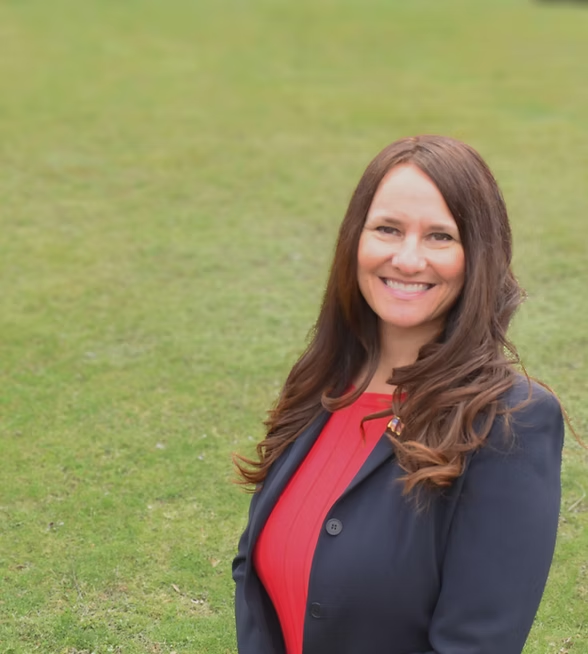
Occupation: Homeschooling educator, former healthcare professional
Age: 51
Municipality of residence: Plum
Party: Republican
Question: Last year’s state budget was delayed in part over the question of whether the state should increase aid to transit agencies, including Pittsburgh Regional Transit. Would you change state funding for transit? If so, how?
Candidate did not respond to questionnaire
Q: With the federal government aggressively pursuing arrests and deportations of some immigrants, how should state police and other state employees interact with federal immigration authorities operating in the commonwealth?
Candidate did not respond to questionnaire
Q: Do you support changing Pennsylvania’s minimum wage? If so, how high should it be, and why?
Candidate did not respond to questionnaire
Q: What, if any, changes would you like to see in Pennsylvania’s voting laws? Are there proposed changes that you oppose? Why?
Candidate did not respond to questionnaire
Q: Do you support the legalization of recreational marijuana? Why or why not?
Candidate did not respond to questionnaire
Q: Would you change the way the state is handling data center proposals? If so, how?
Candidate did not respond to questionnaire
28th Pa. House District
The district is made up of some of the northern reaches of Allegheny County, including the following municipalities: Bradford Woods, Marshall, Pine, Richland, West Deer and part of Hampton.

Incumbent Republican Jeremy Shaffer won it by 14 points in the 2024 general election and another Republican won it by 12 points in 2022.
The race: Shaffer is running for a second term against Democrat Jeremy Ferderber.
Jeremy Ferderber

Occupation: Vice president, Frankferd Farms Foods, Inc.
Age: 48
Municipality of residence: Richland
Party: Democratic
Question: Last year’s state budget was delayed in part over the question of whether the state should increase aid to transit agencies, including Pittsburgh Regional Transit. Would you change state funding for transit? If so, how?
Answer: The struggles of public transportation are here to stay. A century ago we shifted city planning away from walking and streetcars and towards automobiles, and in turn we’ve pushed public transit to the fringes. Rather than continue to waste money trying to squeeze a square peg into a round hole, we need to re-envision a plan that compensates for the weaknesses of a car-centric lifestyle; poor mass transit, high gas demand and crowded roads that require a lot of maintenance. Trains complement our driving, not compete with it. Let’s use them to connect the region we all call home.
Q: With the federal government aggressively pursuing arrests and deportations of some immigrants, how should state police and other state employees interact with federal immigration authorities operating in the commonwealth?
A: The litmus test is a simple one. Have ICE or other immigration agents obtained a criminal warrant from a commonwealth judge? If yes, our police should be involved. The security of our communities is paramount and maintaining the order of our justice system is a required aspect to law enforcement. The law must be followed by all, including those enforcing it. This is both a legal and practical consideration. I have no desire to use our officers’ valuable time pursuing non-criminal cases. That’s time they could be spending actually making our great state safer.
Q:Do you support changing Pennsylvania’s minimum wage? If so, how high should it be, and why?
A: A $15 minimum wage is in danger of losing its status as a living wage, but it is where much of the discussion has centered and I believe makes a fine starting point. The United States, and Pennsylvania specifically, are economic powerhouses due in large part to our well-trained workforce. It’s time we remembered that and reinvest into the middle class that built our country into a superpower. For decades I’ve heard flawed arguments about how raising the minimum wage would be disastrous for inflation. Instead we’ve got runaway inflation with stagnant wages, the worst of both worlds.
Q:What, if any, changes would you like to see in Pennsylvania’s voting laws? Are there proposed changes that you oppose? Why?
A: I was just speaking to my campaign manager about the problem of Pennsylvania’s closed primaries. He registered as an Independent but was quickly dismayed by his inability to vote in the primary elections, a key part of our democratic process. Over a million voters across the commonwealth are excluded, further driving moderate voters away from engaging with our system. Our elections are extremely secure, but if my constituents rest easier knowing that voting ID is required, I am open to discussing this. The caveat is that we must then deliver this state identification, driver’s license, etc. to voters free of charge.
Q: Do you support the legalization of recreational marijuana? Why or why not?
A: Adjacent states have legalized it and now collect revenue that could be ours. Like any drug, there are risks with consumption, but that is part of regulating it, which is far safer than the wild west we currently have. I am wary of industrialization leading to monopolization, so I’d want regulation that allows for entrepreneurial innovation that allows smaller operators and producers the same opportunities for success in the new industry.
Q: Would you change the way the state is handling data center proposals? If so, how?
A: While I respect that my opponent generally shares my interest in regulating data centers, I think he made an error in not voting for Rob Matzie’s bipartisan House Bill 1834. If passed, it would, among other things, impose disclosure and clean energy generation requirements (which should be even higher) to benefit all Pennsylvanians. These should be a given, especially considering that we the taxpayers are currently subsidizing data center construction through a sales tax exemption. If AI is the way of the future, I think they can stand on their own two legs. I’m in favor of repealing this exemption.
Jeremy Shaffer

Occupation: State representative
Age: 49
Municipality of residence: Pine
Party: Republican
Campaign issues webpage: None found
Question: Last year’s state budget was delayed in part over the question of whether the state should increase aid to transit agencies, including Pittsburgh Regional Transit. Would you change state funding for transit? If so, how?
Candidate did not respond to questionnaire
Q: With the federal government aggressively pursuing arrests and deportations of some immigrants, how should state police and other state employees interact with federal immigration authorities operating in the commonwealth?
Candidate did not respond to questionnaire
Q: Do you support changing Pennsylvania’s minimum wage? If so, how high should it be, and why?
Candidate did not respond to questionnaire
Q: What, if any, changes would you like to see in Pennsylvania’s voting laws? Are there proposed changes that you oppose? Why?
Candidate did not respond to questionnaire
Q: Do you support the legalization of recreational marijuana? Why or why not?
Candidate did not respond to questionnaire
Q: Would you change the way the state is handling data center proposals? If so, how?
Candidate did not respond to questionnaire
30th Pa. House District
The district includes Kilbuck, McCandless, Ohio, Ben Avon, Ben Avon heights, Emsworth, Franklin Park and Hampton (districts 3-5 and 12-13).

Incumbent Democrat Arvind Venkat won the seat by about 11 percentage points in 2022 and 2024.
The race: Venkat is running for a third term against Republican Libby Blackburn.
Arvind Venkat

Occupation: State representative, emergency physician
Age: 52
Municipality of residence: McCandless
Party: Democratic
Question: Last year’s state budget was delayed in part over the question of whether the state should increase aid to transit agencies, including Pittsburgh Regional Transit. Would you change state funding for transit? If so, how?
Answer: I have voted multiple times for dedicated funding to support public transit in our region and
across the commonwealth by using a portion of sales and use tax revenue. I will continue to support such efforts. I strongly believe that we need comprehensive reform of the funding of transportation and infrastructure in Pennsylvania, including public transit, roads, and bridges.
Q: With the federal government aggressively pursuing arrests and deportations of some immigrants, how should state police and other state employees interact with federal immigration authorities operating in the commonwealth?
A: I am currently one of two immigrants/naturalized citizens serving in elected office at the state or
federal level in Pennsylvania. The only source of population growth in our region and Pennsylvania as a whole is from the immigrant population. I strongly believe that we need to enact legislation that limits state police and state employees’ interaction with federal immigration authorities to when there is evidence of violent criminal activities by undocumented immigrants. Beyond that, it is not a state responsibility to enforce immigration laws.
Q:Do you support changing Pennsylvania’s minimum wage? If so, how high should it be, and why?
A: I have supported raising the minimum wage over a three-year period of time to $15 per hour and indexing to inflation beyond that. Raising the minimum wage is a matter of economic fairness and ensuring that all workers share in the prosperity generated by their labor.
Q:What, if any, changes would you like to see in Pennsylvania’s voting laws? Are there proposed changes that you oppose? Why?
A: I believe that we should be making voting easier for all eligible voters. I support pre-registration of those 16 and older to make sure they are registered when they turn 18, establishing early in-person voting as is conducted in other states, removal of the dating requirement on mail-in ballots, counting mail-in ballots even if they do not include the inner secrecy envelope, paying for postage or waiving postage requirements for returning mail-in ballots, more ballot drop boxes across the county and state, and allowing precanvassing of mail-in ballots. I oppose efforts to repeal mail-in voting.
Q: Do you support the legalization of recreational marijuana? Why or why not?
A: I have supported the legalization of recreational marijuana if it is done in a manner that regulates potency, packaging and marketing. I believe that marijuana is less dangerous than tobacco and alcohol, both of which are legal, regulated and taxed. I also recognize that marijuana is not benign and therefore requires strict regulations as I have outlined.
Q: Would you change the way the state is handling data center proposals? If so, how?
A: The opposition to data centers is related to anger and fears over artificial intelligence and whether the technology is being deployed for the public good. I have supported a 180-day pause to allow local communities to update their zoning ordinances on data centers and efforts to ensure that data center costs are not conveyed to the public, that local communities can
decide if they want a data center or not and under what conditions, and that local union workers are used in these facilities’ construction. I also support repealing the sales and use tax exemption for data center equipment.
Libby Blackburn

Occupation: Small business owner, former flight attendant
Age: 62
Municipality of residence: McCandless
Party: Republican
Question: Last year’s state budget was delayed in part over the question of whether the state should increase aid to transit agencies, including Pittsburgh Regional Transit. Would you change state funding for transit? If so, how?
Candidate did not respond to questionnaire
Q: With the federal government aggressively pursuing arrests and deportations of some immigrants, how should state police and other state employees interact with federal immigration authorities operating in the commonwealth?
Candidate did not respond to questionnaire
Q: Do you support changing Pennsylvania’s minimum wage? If so, how high should it be, and why?
Candidate did not respond to questionnaire
Q: What, if any, changes would you like to see in Pennsylvania’s voting laws? Are there proposed changes that you oppose? Why?
Candidate did not respond to questionnaire
Q: Do you support the legalization of recreational marijuana? Why or why not?
Candidate did not respond to questionnaire
Q: Would you change the way the state is handling data center proposals? If so, how?
Candidate did not respond to questionnaire
32nd Pa. House District
The district includes Penn Hills, Plum, Verona and part of Plum (districts 1, 2, 3, 7, 17, 18, 19, 20, 21).

Incumbent Democrat Joe McAndrew won the seat unopposed in 2024. In 2022, incumbent Democrat Tony DeLuca died less than a month before Election Day; his name remained on the ballot and he defeated a Green Party candidate by 70 percentage points. McAndrew won the special election to replace DeLuca.
The race: McAndrew is running for a second full term against Republican Gary Motor.
Joe McAndrew

Occupation: State representative
Age: 36
Municipality of residence: Verona
Party: Democratic
Campaign issues webpage: None found
Question: Last year’s state budget was delayed in part over the question of whether the state should increase aid to transit agencies, including Pittsburgh Regional Transit. Would you change state funding for transit? If so, how?
Candidate did not respond to questionnaire
Q: With the federal government aggressively pursuing arrests and deportations of some immigrants, how should state police and other state employees interact with federal immigration authorities operating in the commonwealth?
Candidate did not respond to questionnaire
Q:Do you support changing Pennsylvania’s minimum wage? If so, how high should it be, and why?
Candidate did not respond to questionnaire
Q:What, if any, changes would you like to see in Pennsylvania’s voting laws? Are there proposed changes that you oppose? Why?
Candidate did not respond to questionnaire
Q: Do you support the legalization of recreational marijuana? Why or why not?
Candidate did not respond to questionnaire
Q: Would you change the way the state is handling data center proposals? If so, how?
Candidate did not respond to questionnaire
Gary Motor
Occupation: None found
Age: 66
Municipality of residence: Plum
Party: Republican
Campaign issues webpage: None found
Motor declined to respond to the questionnaire. He said he has received many questionnaires and has not responded to any others, and “decided to keep it the same across the board.”
Question: Last year’s state budget was delayed in part over the question of whether the state should increase aid to transit agencies, including Pittsburgh Regional Transit. Would you change state funding for transit? If so, how?
Candidate declined to respond to questionnaire
Q: With the federal government aggressively pursuing arrests and deportations of some immigrants, how should state police and other state employees interact with federal immigration authorities operating in the commonwealth?
Candidate declined to respond to questionnaire
Q: Do you support changing Pennsylvania’s minimum wage? If so, how high should it be, and why?
Candidate declined to respond to questionnaire
Q: What, if any, changes would you like to see in Pennsylvania’s voting laws? Are there proposed changes that you oppose? Why?
Candidate declined to respond to questionnaire
Q: Do you support the legalization of recreational marijuana? Why or why not?
Candidate declined to respond to questionnaire
Q: Would you change the way the state is handling data center proposals? If so, how?
Candidate declined to respond to questionnaire
33rd Pa. House District
The district includes Aspinwall, Blawnox, Brackenridge, Cheswick, East Deer, Fawn, Fox Chapel, Frazer, Harmar, Harrison, Indiana, O’Hara, Sharpsburg, Springdale Borough, Springdale Township and Tarentum.

Incumbent Democrat Mandy Steele won the seat by about 10 percentage points in 2022 and 2024.
The race: Steele is running for a third term against Republican Michael Hammill.
Mandy Steele

Occupation: State representative
Age: 49
Municipality of residence: Fox Chapel
Party: Democratic
Question: Last year’s state budget was delayed in part over the question of whether the state should increase aid to transit agencies, including Pittsburgh Regional Transit. Would you change state funding for transit? If so, how?
Answer: Pennsylvania must provide reliable, sustainable funding for public transit. In Allegheny County and the Allegheny Valley, Pittsburgh Regional Transit connects workers, seniors, students and families to jobs, healthcare, schools and essential services.I support increased state investment and a long-term funding structure that allows transit agencies to maintain service, improve reliability and avoid disruptive cuts or fare increases. Public transit is essential infrastructure and an important economic development tool that supports workers, businesses and communities. Pennsylvania should fund it accordingly.
Q: With the federal government aggressively pursuing arrests and deportations of some immigrants, how should state police and other state employees interact with federal immigration authorities operating in the commonwealth?
A: State and local law enforcement should focus on protecting our communities, not acting as an extension of federal immigration enforcement. Dangerous criminals who pose a real threat to public safety should be held accountable and, when appropriate under the law, deported. At the same time, immigrants who are working, paying taxes, raising families and contributing to Pennsylvania should not live in fear because of their immigration status.
Q: Do you support changing Pennsylvania’s minimum wage? If so, how high should it be, and why?
A: Absolutely. Pennsylvania should raise the minimum wage to at least $15 an hour. The current $7.25 wage has not kept pace with rising costs for housing, groceries, healthcare and other necessities. Every neighboring state has a higher minimum wage, and Pennsylvania should not continue falling behind. No one working full time should struggle to afford basic needs. Raising the wage to $15 would put more money in workers’ pockets, strengthen families and support local businesses and communities across the commonwealth.
Q:What, if any, changes would you like to see in Pennsylvania’s voting laws? Are there proposed changes that you oppose? Why?
A: I support moving Pennsylvania toward an open primary system so independent voters can have a meaningful voice in choosing the candidates who may ultimately represent them. I also support same-day voter registration to make it easier for eligible Pennsylvanians to participate in our elections. I would oppose efforts to restrict or roll back mail-in voting, as well as other proposals that create unnecessary barriers to the ballot. Our election laws should protect election security while expanding access and making it easier for eligible voters to participate in our democracy.
Q: Do you support the legalization of recreational marijuana? Why or why not?
A: I support legalizing recreational marijuana in Pennsylvania, but it must be done responsibly. Legalization should include strong safety standards, appropriate age restrictions and safeguards against impaired driving. Pennsylvania should also establish a fair tax structure that generates revenue for the commonwealth without creating taxes so high that they encourage an illegal market. A well-regulated system should prioritize public safety, consumer protections and responsible use while ensuring that the revenue generated benefits Pennsylvania communities.
Q: Would you change the way the state is handling data center proposals? If so, how?
A: I believe local communities should have meaningful oversight when data centers are proposed. In the Allegheny Valley, residents and municipal leaders should have a real voice in decisions that could affect electricity costs, water resources, infrastructure, traffic and surrounding neighborhoods. I support strong state standards for transparency and environmental protection, while ensuring local governments have the authority and information they need to evaluate these projects.
Michael Hammill

Occupation: None found; Navy veteran
Age: 56
Municipality of residence: O’Hara
Party: Republican
Question: Last year’s state budget was delayed in part over the question of whether the state should increase aid to transit agencies, including Pittsburgh Regional Transit. Would you change state funding for transit? If so, how?
Candidate did not respond to questionnaire
Q: With the federal government aggressively pursuing arrests and deportations of some immigrants, how should state police and other state employees interact with federal immigration authorities operating in the commonwealth?
Candidate did not respond to questionnaire
Q: Do you support changing Pennsylvania’s minimum wage? If so, how high should it be, and why?
Candidate did not respond to questionnaire
Q: What, if any, changes would you like to see in Pennsylvania’s voting laws? Are there proposed changes that you oppose? Why?
Candidate did not respond to questionnaire
Q: Do you support the legalization of recreational marijuana? Why or why not?
Candidate did not respond to questionnaire
Q: Would you change the way the state is handling data center proposals? If so, how?
Candidate did not respond to questionnaire
35th Pa. House District
The district includes Clairton, Duquesne, Homestead, McKeesport, Munhall, Liberty, Lincoln, Port Vue, South Versailles, Versailles, West Homestead, Whitaker, White Oak and part of West Mifflin (districts 3, 4 and 15).

Lt. Gov. Austin Davis won the seat by 32 points in 2022 and the late Rep. Matthew Gergely ran unopposed for it in 2024. Incumbent Democrat Dan Goughnour won the special election to replace Gergely, who died just days into the current legislative term.
The race: Goughnour is running for a full term against Republican Jim Edwards.
Dan Goughnour

Occupation: State representative
Age: 41
Municipality of residence: McKeesport
Party: Democratic
Question: Last year’s state budget was delayed in part over the question of whether the state should increase aid to transit agencies, including Pittsburgh Regional Transit. Would you change state funding for transit? If so, how?
Candidate did not respond to questionnaire
Q: With the federal government aggressively pursuing arrests and deportations of some immigrants, how should state police and other state employees interact with federal immigration authorities operating in the commonwealth?
Candidate did not respond to questionnaire
Q: Do you support changing Pennsylvania’s minimum wage? If so, how high should it be, and why?
Candidate did not respond to questionnaire
Q:What, if any, changes would you like to see in Pennsylvania’s voting laws? Are there proposed changes that you oppose? Why?
Candidate did not respond to questionnaire
Q: Do you support the legalization of recreational marijuana? Why or why not?
Candidate did not respond to questionnaire
Q: Would you change the way the state is handling data center proposals? If so, how?
Candidate did not respond to questionnaire
Jim Edwards

Occupation: Lt. Col., U.S. Army
Age: 58
Municipality of residence: Munhall
Party: Republican
Campaign issues webpage: None found
Question: Last year’s state budget was delayed in part over the question of whether the state should increase aid to transit agencies, including Pittsburgh Regional Transit. Would you change state funding for transit? If so, how?
Answer: Yes I would change how we fund PRT. I would move to privatize this form of transportation because it has become a huge drain on the budget.
Q: With the federal government aggressively pursuing arrests and deportations of some immigrants, how should state police and other state employees interact with federal immigration authorities operating in the commonwealth?
A: This question needs to be reworded because they are not deporting some immigrants, they are only going after the illegal immigrants. This should be a group effort at every level of law enforcement. In areas where there is total cooperation at all levels there has been zero incidents and when an illegal immigrant is arrested for any reason the ICE detainer should be honored and the illegal immigrant should be held for pick up by ICE. This will make our towns and cities safer.
Q: Do you support changing Pennsylvania’s minimum wage? If so, how high should it be, and why?
A: Minimum wage was initially devised to get teenagers into the work force. The government setting wages has hurt more than it has helped. I think the government should not be in the business of telling private companies how to run their business outside of areas such as OSHA standards and most labor laws to protect the workers.
Q: What, if any, changes would you like to see in Pennsylvania’s voting laws? Are there proposed changes that you oppose? Why?
The main thing is voter ID at all elections and when you are a new voter you should have to prove you are a U.S. citizen.
Q: Do you support the legalization of recreational marijuana? Why or why not?
No, because this is a gateway drug and leads many people into harder drugs. Also, there is a new trend of this type of drug and others being laced with fentanyl and other various drugs that can easily kill a person.
Q: Would you change the way the state is handling data center proposals? If so, how?
I currently do not have a comment on this topic because I have not done enough research to make a rational, intelligent comment.
36th Pa. House District
The district includes Brentwood and Mount Oliver Borough, and the following parts of the City of Pittsburgh: Ward 16, part of Ward 17 (district 4, 5, 6, 7 and 8), part of Ward 18 (district 1), part of Ward 19 (districts 11, 12, 14-27, 29-28), Ward 29 and Ward 32.

Incumbent Democrat Jessica Benham won the seat by 57 points in 2022 and 2024, running against a Libertarian candidate.
The race: Benham is running for a fourth term against Republican Timothy McCune.
Jessica Benham

Occupation: State representative
Age: 35
Municipality of residence: Pittsburgh (South Side Slopes)
Party: Democratic
Question: Last year’s state budget was delayed in part over the question of whether the state should increase aid to transit agencies, including Pittsburgh Regional Transit. Would you change state funding for transit? If so, how?
Answer: Since the last funding package expired without replacement, I don’t think we can keep asking transit agencies to do more without stable state funding. I have voted many times to redirect an existing portion of the sales tax to transit and was a leader in introducing part of the Transit for All PA funding package. However, I am not particularly picky about the exact funding source, but believe that we should fund transit without drastically increasing the tax burden on residents, which is why I tend to support legislation that would redirect existing revenue or would primarily impact non-residents.
Q: With the federal government aggressively pursuing arrests and deportations of some immigrants, how should state police and other state employees interact with federal immigration authorities operating in the commonwealth?
A: State employees and public safety officials should stay in their lane and focus on serving Pennsylvanians and keeping us safe. State employees should be taking steps to resist federal overreach, safeguard Pennsylvanians’ data from inappropriate access by federal officials, and not cooperate with unlawful federal actions.
Q: Do you support changing Pennsylvania’s minimum wage? If so, how high should it be, and why?
A: I do support increasing Pennsylvania’s minimum wage. For me, the precise figure is less important than tying it to inflation moving forward so that it’s not continually reliant on legislators to act. I’ve voted for legislation that [would have] raised it to several different starting points, but would love to see the House leadership team put the bill tying it to inflation up for a vote. There is no reason that wages shouldn’t keep pace with the rising costs of goods and services.
Q:What, if any, changes would you like to see in Pennsylvania’s voting laws? Are there proposed changes that you oppose? Why?
A: I favor open primaries, automatic voter registration for citizens, and more opportunities for early voting. I support other policies that also impact our elections, like limits on contributions to campaigns and full disclosure of all spending meant to influence the outcome of elections.
Q: Do you support the legalization of recreational marijuana? Why or why not?
A: I do support the regulation and taxation of recreational cannabis. It’s already very easy to get a medical card in Pennsylvania and with several states that have legal recreational programs bordering our commonwealth, Pennsylvania residents are spending their money elsewhere. That tax money should benefit Pennsylvanians, not Ohio.
Q: Would you change the way the state is handling data center proposals? If so, how?
A: I have voted many times to change the way that Pennsylvania handles data center proposals, including eliminating any access to state tax credits, requirements around utility use, and giving local communities more power over what happens near them. A corporation shouldn’t be able to effectively dictate the terms of development while residents are left to absorb the costs. I want to make sure Pennsylvania’s economic development policy serves Pennsylvanians, and my voting record reflects that priority. I remain very concerned about data centers and believe that House leadership should give us the opportunity to vote on even stronger protections.
Timothy McCune

Occupation: Home health aide and president, Safety Net of Hope
Age: 45
Municipality of residence: Brentwood
Party: Republican
Question: Last year’s state budget was delayed in part over the question of whether the state should increase aid to transit agencies, including Pittsburgh Regional Transit. Would you change state funding for transit? If so, how?
Answer: Public transit is essential, but taxpayer dollars must be treated with respect. I support reliable state funding for our transit system, provided there is real accountability. Before asking working families for more money, transit agencies must prove they are cutting overhead, operating efficiently and making every dollar count. State funding decisions should prioritize actual ridership, essential community needs and the residents who depend on these services daily, not administrative bloat.
Q: With the federal government aggressively pursuing arrests and deportations of some immigrants, how should state police and other state employees interact with federal immigration authorities operating in the commonwealth?
A: State police exist to enforce state law and protect our communities. Federal civil immigration enforcement is the responsibility of the federal government, and state tax dollars should not be diverted to act as a federal immigration agency. While law enforcement collaboration on legitimate criminal investigations is crucial for public safety, local officers need flexibility and discretion to manage cases appropriately.
Q: Do you support changing Pennsylvania’s minimum wage? If so, how high should it be, and why?
A: I do not support a one-size-fits-all statewide minimum wage mandate. Arbitrary mandates out of Harrisburg put heavy pressure on local small businesses that are already managing high overhead, taxes and inflation. Instead, state policy should focus on lowering the overall cost of living and cultivating a competitive economy where employers naturally offer higher wages to attract and retain workers.
Q: What, if any, changes would you like to see in Pennsylvania’s voting laws? Are there proposed changes that you oppose? Why?
A: Pennsylvania’s election laws must protect voter access while maintaining strict security and transparency. I support standardizing voter identification requirements to build public trust in our election outcomes.
Q: Do you support the legalization of recreational marijuana? Why or why not?
A: I support legalizing adult-use recreational marijuana if implemented safely and responsibly. Legalization would generate substantial state revenue, curb illicit markets and reduce unnecessary law enforcement burdens. However, any regulation must establish a competitive private retail market, direct significant funding to local public safety and addiction services, and protect the rights of employers to maintain drug-free workplaces.
Q: Would you change the way the state is handling data center proposals? If so, how?
A: Pennsylvania must protect local communities and utility ratepayers from the heavy demands of data center developments. I support state guardrails requiring proposals to disclose detailed projected water and electricity usage upfront and provide their own energy sources. Operations must adhere to strict noise limits, including reduced thresholds during nighttime hours. Furthermore, developers that exceed their energy projections or break noise limits must face steep financial penalties. Revenue generated from these fines should be directed specifically to fund local municipality stormwater management systems.
38th Pa. House District
The district includes Baldwin Borough, Dravosburg, Glassport, Whitehall and parts of Pittsburgh (Ward 31) and West Mifflin (Districts 1, 2, 5-21).

Incumbent Democrat John Inglis won the seat by 11 points in 2024, and another Democrat ran unopposed in 2022.
The race: The race is a rematch between Inglis, seeking a second term, and Republican Stone Sobieralski.
John Inglis

Occupation: State representative
Age: 39
Municipality of residence: West Mifflin
Party: Democratic
Question: Last year’s state budget was delayed in part over the question of whether the state should increase aid to transit agencies, including Pittsburgh Regional Transit. Would you change state funding for transit? If so, how?
Candidate did not respond to questionnaire
Q: With the federal government aggressively pursuing arrests and deportations of some immigrants, how should state police and other state employees interact with federal immigration authorities operating in the commonwealth?
Candidate did not respond to questionnaire
Q: Do you support changing Pennsylvania’s minimum wage? If so, how high should it be, and why?
Candidate did not respond to questionnaire
Q:What, if any, changes would you like to see in Pennsylvania’s voting laws? Are there proposed changes that you oppose? Why?
Candidate did not respond to questionnaire
Q: Do you support the legalization of recreational marijuana? Why or why not?
Candidate did not respond to questionnaire
Q: Would you change the way the state is handling data center proposals? If so, how?
Candidate did not respond to questionnaire
Stone Sobieralski

Occupation: None found
Age: 29
Municipality of residence: Whitehall
Party: Republican
Campaign issues webpage: None found
Question: Last year’s state budget was delayed in part over the question of whether the state should increase aid to transit agencies, including Pittsburgh Regional Transit. Would you change state funding for transit? If so, how?
Candidate did not respond to questionnaire
Q: With the federal government aggressively pursuing arrests and deportations of some immigrants, how should state police and other state employees interact with federal immigration authorities operating in the commonwealth?
Candidate did not respond to questionnaire
Q: Do you support changing Pennsylvania’s minimum wage? If so, how high should it be, and why?
Candidate did not respond to questionnaire
Q: What, if any, changes would you like to see in Pennsylvania’s voting laws? Are there proposed changes that you oppose? Why?
Candidate did not respond to questionnaire
Q: Do you support the legalization of recreational marijuana? Why or why not?
Candidate did not respond to questionnaire
Q: Would you change the way the state is handling data center proposals? If so, how?
Candidate did not respond to questionnaire
39th Pa. House District
The district includes some of southern Allegheny County as well as part of Washington County. Allegheny County municipalities include Elizabeth Borough, Elizabeth Township, Forward, Jefferson Hills, Pleasant Hills, South Park and West Elizabeth. Washington County municipalities include: Carroll, Finleyville, Monongahela, New Eagle and Union.

Incumbent Republican Andrew Kuzma won the district by 18 points in 2022 and 24 points in the 2024.
The race: Kuzma is seeking a third term, running against Democrat Dylan Altemara.
Dylan Altemara

Occupation: Educational staffing professional, EdD student
Age: 33
Municipality of residence: Elizabeth Township
Party: Democratic
Question: Last year’s state budget was delayed in part over the question of whether the state should increase aid to transit agencies, including Pittsburgh Regional Transit. Would you change state funding for transit? If so, how?
Answer: Yes. Reliable public transit is basic infrastructure: It connects people to jobs, schools, health care and local businesses. I support increasing predictable, recurring state operating support for transit agencies, including Pittsburgh Regional Transit, so riders are not repeatedly threatened with major service cuts or unaffordable fare increases. Funding should reflect ridership and community need while requiring transparency and responsible use of taxpayer dollars. Southwestern Pennsylvania also needs better connections between communities outside Pittsburgh, including the Mon Valley and South Hills, where transportation can be a major barrier to employment and opportunity.
Q: With the federal government aggressively pursuing arrests and deportations of some immigrants, how should state police and other state employees interact with federal immigration authorities operating in the commonwealth?
A: State police and state employees should follow the law and cooperate with valid judicial warrants and lawful court orders, but Pennsylvania should not turn state agencies into a substitute federal immigration force for routine civil immigration enforcement. State resources should remain focused on public safety and essential services. People should be able to report crimes, seek medical care, send their children to school, and cooperate with police without unnecessary fear. When federal authorities operate in Pennsylvania, state employees should respect constitutional rights, due process and clear legal limits on using state personnel and resources.
Q: Do you support changing Pennsylvania’s minimum wage? If so, how high should it be, and why?
A: Yes. Pennsylvania’s $7.25 minimum wage is far too low for today’s cost of living. I support raising it to at least $15 an hour, then indexing it so wages don’t fall behind inflation again. Work should provide a path to stability, not force people to choose between rent, groceries, utilities and health care. Raising the wage floor also strengthens wages above the minimum and helps local economies because working families spend more of their income in their communities. Pennsylvania should reward work and stop relying on a wage floor that has been frozen for years.
Q: What, if any, changes would you like to see in Pennsylvania’s voting laws? Are there proposed changes that you oppose? Why?
A: I support practical reforms that expand access while strengthening confidence in our elections.
Pennsylvania should establish true in-person early voting, give counties more time to pre-canvass mail ballots, and create a clear statewide process for voters to correct minor mail-ballot errors. We should continue investing in secure election equipment, trained poll workers and county election offices. I oppose changes that make voting unnecessarily harder without improving election security, including rules that could disqualify eligible voters over minor technical mistakes. The goal should be simple: secure elections in which every eligible voter can participate and every lawful vote is counted.
Q: Do you support the legalization of recreational marijuana? Why or why not?
A: Yes. I support legalizing cannabis for adults 21 and older through a safe, regulated and taxed system. Pennsylvania should allow legal possession, purchase and home cultivation while establishing strong consumer-safety standards and keeping cannabis away from minors. I do not support a state-store monopoly. I favor a privately operated, state-regulated market that gives Pennsylvania small businesses, local entrepreneurs, independent operators and family farmers a fair opportunity to participate. Legalization should also address the harms of past prohibition through appropriate record-clearing and reinvestment in communities disproportionately affected by marijuana enforcement.
Q: Would you change the way the state is handling data center proposals? If so, how?
A: Yes. Pennsylvania should put enforceable guardrails around data centers before communities bear the costs. I support strong standards requiring developers to pay for the power and infrastructure they need, protect water and air, disclose energy and water use, address noise, and avoid shifting utility costs onto residents. Local governments and residents must have a meaningful voice before projects move forward. State incentives should be tied to local tax benefits, community benefit agreements, good-paying union jobs, apprenticeships and responsible energy use. I support making strong statewide data-center standards permanent in law while preserving meaningful local review and zoning authority.
Andrew Kuzma

Occupation: State representative
Age: 30
Municipality of residence: Elizabeth Township
Party: Republican
Campaign issues webpage: None found
Question: Last year’s state budget was delayed in part over the question of whether the state should increase aid to transit agencies, including Pittsburgh Regional Transit. Would you change state funding for transit? If so, how?
Candidate did not respond to questionnaire
Q:With the federal government aggressively pursuing arrests and deportations of some immigrants, how should state police and other state employees interact with federal immigration authorities operating in the commonwealth?
Candidate did not respond to questionnaire
Q: Do you support changing Pennsylvania’s minimum wage? If so, how high should it be, and why?
Candidate did not respond to questionnaire
Q: What, if any, changes would you like to see in Pennsylvania’s voting laws? Are there proposed changes that you oppose? Why?
Candidate did not respond to questionnaire
Q: Do you support the legalization of recreational marijuana? Why or why not?
Candidate did not respond to questionnaire
Q: Would you change the way the state is handling data center proposals? If so, how?
Candidate did not respond to questionnaire
40th Pa. House District
The district includes Bethel Park, part of Upper St. Clair (Ward 3, districts 1 and 2; Ward 4, districts 2, 3 and 4; Ward 5) and Peters Township in Washington County.

Incumbent Republican Natalie Mihalek won the district by 14 points in 2022 and 21 points in 2024.
The race: Mihalek is seeking a fifth term, running against Democrat Jon Lloyd.
Jon Lloyd

Occupation: Technology sector
Age: 45
Municipality of residence: Bethel Park
Party: Democratic
Question: Last year’s state budget was delayed in part over the question of whether the state should increase aid to transit agencies, including Pittsburgh Regional Transit. Would you change state funding for transit? If so, how?
Answer: I believe we’ve relied for too long on putting “Band-Aid” solutions together when it comes to transit. I would support increasing state funding and make it more stable. PRT is part of our region’s necessary infrastructure as thousands of our residents use it to get to work, school, events and even healthcare. If we dedicate more funding to transit, organizations like PRT can not only plan better but mitigate the need for major fare increases or cuts to service. Ultimately, we need transit funding to reflect just how important it is to our communities.
Q: With the federal government aggressively pursuing arrests and deportations of some immigrants, how should state police and other state employees interact with federal immigration authorities operating in the commonwealth?
A: I believe that the federal immigration system has been weaponized in a way that is dangerous and unfair. I support responsible immigration enforcement, but I do not believe that state police or other state employees should be an automatic extension of federal enforcement. I believe our state resources should instead be focused on serving Pennsylvania’s residents, and as such I support prohibiting state employees from assisting federal immigration agents. This also helps to rebuild damaged trust with our immigrant communities, which is crucial for the diversity that makes our state so vibrant.
Q: Do you support changing Pennsylvania’s minimum wage? If so, how high should it be, and why?
A: I support raising Pennsylvania’s minimum wage. The affordability crisis is real and we are severely behind our neighboring states when it comes to the minimum wage. It’s unacceptable that the cost of living gets higher each year, yet our minimum wage hasn’t increased since 2009. I would be in favor of a gradual increase over the next three years to $15 per hour. I believe people work harder when they are happier with their pay. This also means less people have to take advantage of state programs like SNAP, and would provide a boost to our economy through greater spending ability.
Q: What, if any, changes would you like to see in Pennsylvania’s voting laws? Are there proposed changes that you oppose? Why?
A: First, I am a supporter of open primaries, as under our current closed system, many voters can’t truly vote for a candidate that they support without a registration change. I also support expanding earlier mail-in ballot processing times to help speed up the election results. I would oppose any proposed changes that would restrict mail-in voting access or other things that make voting accessible and convenient for residents. We can maintain trustworthy elections while at the same time broadening the ease by which someone can securely vote.
Q: Do you support the legalization of recreational marijuana? Why or why not?
A: I do support the legalization of recreational marijuana. It is beneficial for the state as it would provide for funds that are currently leaving Pennsylvania. The tax revenue could help us balance our budget as well as help with things like property tax relief, school funding and more. It would also allow police resources to be diverted to crime that has real negative effects in our state. All over the country this has become a bipartisan issue, and with more than 70% of adults in the county supporting legalization, it’s time for us to represent the people.
Q: Would you change the way the state is handling data center proposals? If so, how?
A: I understand that the topic of data centers is one that is moving rapidly. If data centers are to be built, I align with Governor Shapiro’s GRID plan that would require, in his words, the strictest standards of accountability and transparency. I believe that these centers, if built, should utilize union labor and meet environmental and economic standards. Most of all, I believe that this is an issue where it’s incredibly important to involve localities in the conversation as well as the residents who could be directly impacted by data centers. We can’t make these decisions in a silo.
Natalie Mihalek

Occupation: State representative
Age: Not found
Municipality of residence: Not found
Party: Republican
Question: Last year’s state budget was delayed in part over the question of whether the state should increase aid to transit agencies, including Pittsburgh Regional Transit. Would you change state funding for transit? If so, how?
Candidate did not respond to questionnaire
Q:With the federal government aggressively pursuing arrests and deportations of some immigrants, how should state police and other state employees interact with federal immigration authorities operating in the commonwealth?
Candidate did not respond to questionnaire
Q: Do you support changing Pennsylvania’s minimum wage? If so, how high should it be, and why?
Candidate did not respond to questionnaire
Q: What, if any, changes would you like to see in Pennsylvania’s voting laws? Are there proposed changes that you oppose? Why?
Candidate did not respond to questionnaire
Q: Do you support the legalization of recreational marijuana? Why or why not?
Candidate did not respond to questionnaire
Q: Would you change the way the state is handling data center proposals? If so, how?
Candidate did not respond to questionnaire
44th Pa. House District
The district includes Aleppo, Bell Acres, Crescent, Edgeworth, Findlay, Glen Osborne, Glenfield, Haysville, Leet, Leetsdale, Moon, North Fayette, Sewickley, Sewickley Heights, Sewickley Hills.
Incumbent Republican Valerie Gaydos won the seat by 10 points in 2022 and by 8 points in 2024.

The race: Gaydos is seeking a fifth term, running in a rematch against her 2024 opponent, Democrat Hadley Haas.
Hadley Haas

Occupation: Community advocate
Age: 54
Municipality of residence: Glen Osborne
Party: Democratic
Question: Last year’s state budget was delayed in part over the question of whether the state should increase aid to transit agencies, including Pittsburgh Regional Transit. Would you change state funding for transit? If so, how?
Answer: Finding sustainable funding for public transportation remains a critical issue for our state legislature, and I would support changing the way we go about it. I favor creative solutions like Rep. Lindsay Powell’s legislation that would allow local governments to take part in public-private partnerships to improve transportation infrastructure. Regulation of skill games could be another important revenue stream to support public transit. I look forward to exploring new ways to fund public transit so that folks can trust it to get them where they need to go.
Q: With the federal government aggressively pursuing arrests and deportations of some immigrants, how should state police and other state employees interact with federal immigration authorities operating in the commonwealth?
A: I believe we need compassionate, comprehensive immigration reform in this country. However, I am very concerned about the reckless and inhumane actions of federal immigration enforcement agencies under the current administration. Their conduct undermines the safety of our communities and the trust citizens have in law enforcement, and it creates undue chaos on our streets. As a result, I do not support any state resources being used to assist federal immigration enforcement operations here in Pennsylvania.
Q: Do you support changing Pennsylvania’s minimum wage? If so, how high should it be, and why?
A: Yes, I enthusiastically support raising the minimum wage to $15, which is in line with neighboring states like New Jersey and Delaware. It is embarrassing and unacceptable that our minimum wage hasn’t increased since 2009 and is lower than all of our neighbors. In fact, studies have shown that raising the minimum wage would boost our economy and reduce taxpayer subsidization of low-wage work. Plenty of our neighbors depend on minimum wage jobs, and they deserve to make a livable income. Raising the minimum wage should be the first step the next legislature takes to make life more affordable in Pennsylvania.
Q: What, if any, changes would you like to see in Pennsylvania’s voting laws? Are there proposed changes that you oppose? Why?
A: I support efforts to keep our elections secure, to make voting more accessible, and to increase voter participation. These include early voting, mail-in voting, and multilingual voting resources. I believe 16- and 17-year-olds should be able to pre-register to vote, and that voters who will be 18 by the day of the general election should be eligible to vote in the corresponding primary. I support making the mail-in voting process as straightforward and secure as possible and believe we should find a way for all registered voters, regardless of party affiliation, to participate in primary elections.
Q: Do you support the legalization of recreational marijuana? Why or why not?
A: We must find new, creative sources of revenue to sustainably fund public transportation, roadway infrastructure, education and other critical state programs without increasing the average consumer’s tax burden. I support legalizing marijuana as one way to do that.
Marijuana legalization is long overdue, and by delaying it, we miss out on hundreds of millions of dollars per year in tax revenue. It’s critical that these legalization efforts also restrict those under 21 from accessing controlled substances or products, and provide training resources to law enforcement so they can continue to keep our communities safe.
Q: Would you change the way the state is handling data center proposals? If so, how?
A: Statewide regulations that ensure electricity bills never increase as a result of data center construction and corporate greed are the most important pieces of the conversation. I support bills like Rep. Rob Matzie’s H.B. 1834, which would bar data centers from passing energy costs to consumers.
Municipalities must have enough time to make informed decisions for their communities. Rep. Paul Friel’s bill, H.B. 2496, which would allow municipalities to enact a 180-day pause on data center construction, is another legislative measure I support. Policies like H.B. 2496 provide time to get up to speed on a fast-moving issue, hear from constituents and make educated decisions, which is critical.
Valerie Gaydos

Occupation: State representative
Age: 59
Municipality of residence: Edgeworth
Party: Republican
Question: Last year’s state budget was delayed in part over the question of whether the state should increase aid to transit agencies, including Pittsburgh Regional Transit. Would you change state funding for transit? If so, how?
Answer: I supported the bipartisan compromise on transit aid included in this year’s budget because it is a service that is vital to so many across the state. “Changing state funding for transit” means one of two things: increasing taxes to pay for it (which hurts those who rely on it most) or taking dollars away from other worthy needs (which, again, will often impact those who rely on transit most.) I believe our first goal must be to increase accountability and efficiency within the transit systems as audits and public reports have shown significant shortfalls in fiscal management, so systems can provide services with the same funding.
Q: With the federal government aggressively pursuing arrests and deportations of some immigrants, how should state police and other state employees interact with federal immigration authorities operating in the commonwealth?
A: All state police, employees and our citizens should follow the law. While this seems like an obvious statement that shouldn’t need to be said, the hyperpartisan nature of today’s world has seen a breakdown of this once commonly-held idea – even on actions taken identically under different administrations. Whether one agrees or disagrees with actions being taken, they must use the legal tools available (lawful protest, the judicial system, lobbying legislators for change) to call for any changes they may seek.
Q: Do you support changing Pennsylvania’s minimum wage? If so, how high should it be, and why?
A: While Pennsylvania’s current minimum wage does match the federal minimum wage, I do support raising it. The state’s minimum wage hasn’t been adjusted since 2009, meaning that – in real dollars – it is effectively much less. The free market has taken care of much of the necessary adjustment, now the legislature should follow. Any increase must be undertaken carefully and with input from all shareholders as to not negatively impact our economy, job creators or workers themselves. There are too many examples of governments setting an arbitrary number resulting in higher costs for consumers, lost jobs for workers, or both.
Q: What, if any, changes would you like to see in Pennsylvania’s voting laws? Are there proposed changes that you oppose? Why?
A: I would support changes that restore the public trust in our election systems as I believe this is the greatest tool we have to increase voter participation. More specifically, I support pre-registration of voters for those turning 18 before Election Day but between the normal cut-off date and the election date. I support allowing the counting of mail-in ballots to begin on Election Day morning to ensure all mail-in results are included with poll-cast votes in voting results on Election Night. We must ensure that all voting regulations are interpreted and enforced the same way across the commonwealth.
Q: Do you support the legalization of recreational marijuana? Why or why not?
A: The state police oppose legalization as a threat to public safety. The American Medical Association recognizes marijuana use as a gateway to more serious drug use. There is no method to measure impairment in connection to driving to help combat DUI with marijuana. Studies by the Insurance Institute for Highway Safety the affiliated Highway Loss Data Institute found that crash rates spiked in marijuana legalization states. States like California, Oregon and Colorado saw anticipated revenues fall short of projections, meaning legalization was not the panacea promised to citizens. Additionally In Pennsylvania, the Department of Agriculture and Department of Health play distinct roles in regulating hemp and marijuana. All of these factors have led me to oppose legalizing recreational marijuana at this time.
Q: Would you change the way the state is handling data center proposals? If so, how?
A: I was an opponent of the governor’s original GRID proposal because it was a fast-track voluntary program that put developers before communities. Now that the governor has significantly changed his position, I hope he will join in the efforts I already support: removing the sales tax exemption enjoyed by data center developers, allowing local municipalities to place a moratorium on data center development to give them the time to properly study proposals; making sure data centers can support their own energy needs; and ensuring that any data centers are located in industrial areas away from homes. Bringing business to our communities can bring economic opportunity, but any and all development must respect residents, local communities and our environment. Most importantly, I will not support legislation allowing utilities to shift data center energy costs onto Pennsylvania consumers.
45th Pa. House District
The district includes suburbs to the west and southwest of Pittsburgh. Includes the municipalities of Bridgeville, Carnegie, Collier, Coraopolis, Kennedy, McKees Rocks, Neville, McKees Rocks, Pennsbury Village, Robinson and Stowe.

Retiring Democratic Rep. Anita Kulik won by 16 and 26 points in the last two elections, respectively, but she significantly outran other Democrats on the ballot those years.
The race: Democrat Brittany Bloam won a competitive primary to succeed Kulik as the nominee. She will run against Republican James Julius.
Brittany Bloam

Occupation: Attorney, Meyer, Unkovic & Scott LLP
Age: 40
Municipality of residence: Robinson Township
Question: Last year’s state budget was delayed in part over the question of whether the state should increase aid to transit agencies, including Pittsburgh Regional Transit. Would you change state funding for transit? If so, how?
Answer: Yes, I believe that we need to fully and sustainably fund our public transit by creating new revenue streams. I support Rep. Jessica Benham and Rep. Aerion Abney’s Transit for All funding package, which designates new sources of funding to dedicate to funding our public transit.
Q: With the federal government aggressively pursuing arrests and deportations of some immigrants, how should state police and other state employees interact with federal immigration authorities operating in the commonwealth?
A: I oppose using state money to fund the Trump administration’s aggressive overreach of federal power. State police and other state employees fulfill vital roles in our commonwealth, and should be able to focus on their jobs to protect public safety without participation in federal actions that undermine the public trust and upset the balance of power between the state and the federal government.
Q: Do you support changing Pennsylvania’s minimum wage? If so, how high should it be, and why?
A: I support recent efforts by the state House of Representatives to increase the minimum wage in Pennsylvania (H.B. 2189). It’s beyond time that we caught up to surrounding states. I also support raising the tipped minimum; every worker in Pennsylvania deserves a fair living wage, and as costs increase, it is only fair that workers earn more.
Q: What, if any, changes would you like to see in Pennsylvania’s voting laws? Are there proposed changes that you oppose? Why?
A: I’ve served as both an election protection volunteer and a poll worker on Election Day. I’ve seen firsthand that our elections are safe, secure and fair, and we must stop the unfounded efforts to undermine the public’s trust in these institutions.
I support increasing access to the ballot by opening up our primaries, allowing same-day or automatic voter registration, pre-canvassing mail-in ballots and increasing the number of drop boxes to make it easier to vote.
Q: Do you support the legalization of recreational marijuana? Why or why not?
A: Yes. I support the legalization of recreational marijuana with thoughtful regulation. Pennsylvania is surrounded by states that have legalized cannabis. We are losing money as our citizens purchase recreational marijuana in neighboring states. Further, legalization would allow us to ensure product safety, restrict access for minors, and bring transparency to an existing industry. It would also create a new revenue source for Pennsylvania to help fully fund transit or our public schools.
Q: Would you change the way the state is handling data center proposals? If so, how?
A: The biggest concern with data centers are the environmental effects and impacts on already-rising costs of energy. I support Gov. Shapiro’s efforts to regulate the data center industry via executive order, but the state government needs to pass legislation to codify those regulations. I support H.B. 1834, sponsored by Representative Rob Matzie, which would regulate the growth of data centers and protect the power grid while also working to prevent energy cost hikes to Pennsylvanians.
James Julius

Occupation: Small business owner, VISIMO
Age: 41
Municipality of residence: Robinson
Party: Republican
Question: Last year’s state budget was delayed in part over the question of whether the state should increase aid to transit agencies, including Pittsburgh Regional Transit. Would you change state funding for transit? If so, how?
Answer: People depend on transit to get to work, school and medical appointments. I would consider additional state funding, but it must come with a plan that fixes the underlying problems. For PRT and other agencies, that means clear budgets, independent
performance reviews and public reporting on costs, reliability and ridership. I would support a predictable, long-term funding formula tied to those expectations. Before approving more money, legislators should identify how to pay for it and what riders will receive in return. Riders deserve dependable service, and taxpayers deserve to knowtheir money is being used responsibly.
Q: With the federal government aggressively pursuing arrests and deportations of some immigrants, how should state police and other state employees interact with federal immigration authorities operating in the commonwealth?
A: I support our police and giving them the resources, training and anything else that they need to do their jobs safely and make it home safely every day. Our immigration laws should be enforced, and state police should cooperate with federal authorities in criminal investigations and lawful public-safety operations. Their primary responsibility should remain protecting Pennsylvania communities, not taking over routine federal immigration enforcement. Other state employees should meet their legal obligations and
protect confidential information as required by law. I oppose obstructing lawful enforcement. Supporting our officers, respecting due process and treating people with dignity go together.
Q: Do you support changing Pennsylvania’s minimum wage? If so, how high should it be, and why?
A: Yes. Pennsylvania’s minimum wage is still $7.25 an hour. That is not enough. I support a phased increase to $12, with a clear schedule so small businesses and nonprofits have time to plan. As a business owner, I understand that payroll decisions affect both employees and the people keeping a business open. We should raise the wage responsibly, watch the effects on workers and employers, and revisit it as conditions change. Leaving it unchanged indefinitely is not a solution.
Q: What, if any, changes would you like to see in Pennsylvania’s voting laws? Are there proposed changes that you oppose? Why?
A: I support requiring voter ID, with free identification for anyone who needs it, accurate voter rolls and clear statewide rules. I would end no-excuse mail voting while keeping traditional absentee voting for people who qualify because they cannot vote in person. I
also support publicly observable, bipartisan hand counts of paper ballots before results are certified. Election officials should be able to verify results without relying solely on a vendor’s software. I oppose changes that make the process less transparent or prevent eligible citizens from voting. People should be able to understand how their votes are counted.
Q: Do you support the legalization of recreational marijuana? Why or why not?
A: No. I support decriminalizing possession of small amounts of marijuana for personal use, but I do not support recreational legalization or commercialization. Someone should not carry a criminal record for low-level possession. That does not mean Pennsylvania needs a commercial marijuana industry. Tax revenue alone does not tell us whether legalization benefits communities; we also have to consider enforcement,
public health and impaired driving. I have not seen convincing evidence that the promised revenue justifies those tradeoffs. We can reduce penalties without creating another industry built around selling intoxicants.
Q: Would you change the way the state is handling data center proposals? If so, how?
Yes. I support a statewide pause on new data-center permits, approvals and construction until stronger protections are enacted. Developers should finance enough new, reliable electricity generation to exceed their projected peak demand, with that generation operating before the data center opens. The surplus must be connected and available to the broader grid — not simply purchased from existing supply. Developers must cover the infrastructure costs their projects create. Communities deserve local approval authority, meaningful public hearings and full disclosure of resource use and agreements. Families should not be asked to subsidize these projects through higher utility bills.
46th Pa. House District
The district includes parts of Allegheny County and Washington County. In Allegheny: Oakdale and South Fayette. In Washington: Canonsburg, Cecil, Chartiers, Houston, Mount Pleasant and part of North Strabane (Districts 6, 7, 8 and 9). It also includes McDonald, which is split between the two counties.

Incumbent Republican Jason Ortitay ran unopposed for the seat in 2022 and won by 24 percentage points in 2024.
The race: Ortitay is running for a seventh term against Democrat Mike Crossey.
Mike Crossey

Occupation: Semi-retired business broker
Age: 75
Municipality of residence: South Fayette
Question: Last year’s state budget was delayed in part over the question of whether the state should increase aid to transit agencies, including Pittsburgh Regional Transit. Would you change state funding for transit? If so, how?
Answer: Public transit is a part of our public infrastructure — it needs to be considered as such, and prioritized. It also needs to be expanded into more suburban and rural communities. I think we need to create a dedicated funding source instead of the patchwork approach Pennsylvania currently uses. The past few budgets have withdrawn money from the so-called “rainy day fund.” This is not sustainable. I will work with transportation professionals to create a system that has dedicated funding and expanded services.
Q: With the federal government aggressively pursuing arrests and deportations of some immigrants, how should state police and other state employees interact with federal immigration authorities operating in the commonwealth?
A: State and local police should not be co-opted into working for the federal ICE program. I will write legislation to control ICE in Pennsylvania. It is out of control now. Getting criminals off the streets is imperative, and I support that, but arresting and detaining individuals because of the language they speak or the way they look is un-American, and I will put an end to that ICE overreach.
Q: Do you support changing Pennsylvania’s minimum wage? If so, how high should it be, and why?
A: Yes, Pennsylvania’s minimum wage should be raised to $15.00 an hour and tied to inflation so that it increases automatically. The research proves this does not have a severe negative impact on businesses or inflation. It actually increases business volume because people have more spending power.
Q: What, if any, changes would you like to see in Pennsylvania’s voting laws? Are there proposed changes that you oppose? Why?
A: Pennsylvania voting laws are fine and working fine. Politicians should quit trying to manipulate voting to their advantage. The cases of fraud and impropriety are so small that it’s not worth debating. If anything, we should expand access to voting so that more people can vote.
Q: Do you support the legalization of recreational marijuana? Why or why not?
A: I support the legalization of adult use of recreational marijuana. It is probably no more dangerous than beer. This needs to be regulated with the caution, safeguards and restrictions necessary. I also believe this could be a new source of revenue by the state government as the sales tax would create new revenue.
Q: Would you change the way the state is handling data center proposals? If so, how?
A: Data center development can provide a burst of new construction jobs, and our building trades would benefit from that. At the same time, we have to make sure it is done correctly. I would propose multiple restrictions, including setbacks, noise, water use and environmental protections. I am also opposed to any big tax exemptions or tax giveaways to these large corporations. I would prohibit non-disclosure agreements and make sure local communities cannot be bullied. I would also have strict revenue set asides for deconstruction and damages that might now be unforeseen. I would also make it clear that corporate executives could not hide behind corporate bankruptcy laws and are liable for their decisions they make as executives.
Jason Ortitay

Occupation: State representative
Age: None found
Municipality of residence: Cecil
Party: Republican
Question: Last year’s state budget was delayed in part over the question of whether the state should increase aid to transit agencies, including Pittsburgh Regional Transit. Would you change state funding for transit? If so, how?
Candidate did not respond to questionnaire
Q: With the federal government aggressively pursuing arrests and deportations of some immigrants, how should state police and other state employees interact with federal immigration authorities operating in the commonwealth?
Candidate did not respond to questionnaire
Q: Do you support changing Pennsylvania’s minimum wage? If so, how high should it be, and why?
Candidate did not respond to questionnaire
Q: What, if any, changes would you like to see in Pennsylvania’s voting laws? Are there proposed changes that you oppose? Why?
Candidate did not respond to questionnaire
Q: Do you support the legalization of recreational marijuana? Why or why not?
Candidate did not respond to questionnaire
Q: Would you change the way the state is handling data center proposals? If so, how?
Candidate did not respond to questionnaire
Public Source will publish live election returns on primary night, with race calls provided by the Associated Press. Find them at publicsource.org or on our social media channels.
Charlie Wolfson is the local government reporter for Pittsburgh’s Public Source. He can be reached at charlie@publicsource.org.
This story was fact-checked by.
MOST READ STORIES